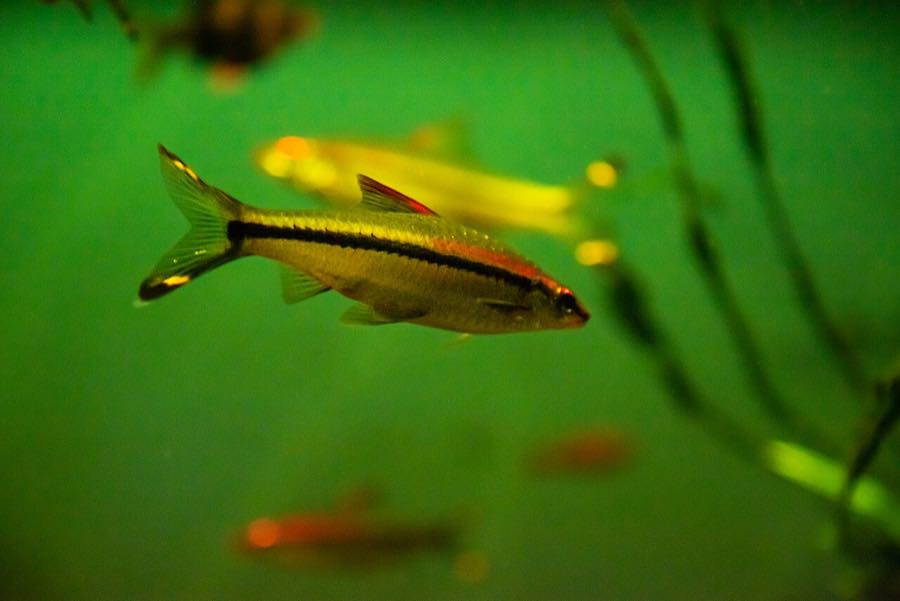
Denison barb tank size
Plan for a minimum tank length of 150 cm to house this active schooling fish, while the species profile suggests a tank length of 120 cm. Adults reach an adult length of 11 cm standard length according to Seriously Fish, while Practical Fishkeeping records adults around an adult length of 12 cm without specifying standard versus total length.Plan for a minimum tank length of about 5 ft (59 in) to house this active schooling fish, while the species profile suggests a tank length of about 4 ft (47 in). Adults reach an adult length of 4 in standard length according to Seriously Fish, while Practical Fishkeeping records adults around an adult length of 5 in without specifying standard versus total length.[1][8]
In nature, this species is endemic to Kerala and Karnataka in southern India, inhabiting oxygen-rich stream headwaters and rocky pools framed by shoreline vegetation. Provide a long, open swimming area paired with stable perimeter cover, and fit a tight lid because these barbs can jump.In nature, this species is endemic to Kerala and Karnataka in southern India, inhabiting oxygen-rich stream headwaters and rocky pools framed by shoreline vegetation. Provide a long, open swimming area paired with stable perimeter cover, and fit a tight lid because these barbs can jump.[1][8]
Denison barb water parameters
Maintain your aquarium water within routine overlapping targets of 18–25 °C, pH 6.5–7.8, and a hardness of 5–15 dGH. Denison barbs require high dissolved oxygen levels alongside moderate water movement to mirror their natural upland streams.Maintain your aquarium water within routine overlapping targets of 64–77 °F, pH 6.5–7.8, and a hardness of 5–15 dGH. Denison barbs require high dissolved oxygen levels alongside moderate water movement to mirror their natural upland streams.[1]
Feeding denison barbs
Offer a balanced mix of high-quality dried foods, including flakes, granules, and small sinking pellets, complemented by small live or frozen bloodworm, Daphnia, Artemia, and cyclops. Sinking foods are preferred by this species profile.Offer a balanced mix of high-quality dried foods, including flakes, granules, and small sinking pellets, complemented by small live or frozen bloodworm, Daphnia, Artemia, and cyclops. Sinking foods are preferred by this species profile.[1][8]
Feed your barbs once a day, offering only what they can clear within a few minutes. Avoid offering excess leftovers, because uneaten food decays and releases toxic waste into the water column.Feed your barbs once a day, offering only what they can clear within a few minutes. Avoid offering excess leftovers, because uneaten food decays and releases toxic waste into the water column.[2]
Denison barb behaviour
Keep a group of at least six Denison barbs, with sources suggesting six to ten individuals. They form an active, schooling species that is generally peaceful in a researched community, though grouping does not mean the fish will always thrive peacefully.Keep a group of at least six Denison barbs, with sources suggesting six to ten individuals. They form an active, schooling species that is generally peaceful in a researched community, though grouping does not mean the fish will always thrive peacefully.[1]
Check identifications carefully when purchasing stock. The similar species Sahyadria chalakkudiensis is sometimes sold under the Denison barb name and can show more belligerent behaviour in home aquariums.Check identifications carefully when purchasing stock. The similar species Sahyadria chalakkudiensis is sometimes sold under the Denison barb name and can show more belligerent behaviour in home aquariums.[1]
You may encounter trade names such as rose line shark or red-line torpedo barb, as well as a selectively bred gold colour form. In a well-maintained display, this species generally does not tend to harm aquatic plants.You may encounter trade names such as rose line shark or red-line torpedo barb, as well as a selectively bred gold colour form. In a well-maintained display, this species generally does not tend to harm aquatic plants.[1]
Barbs can live for several years, and larger barb species may live longer. Seek out captive-bred stock whenever possible, as wild collection has contributed to wild population decline.Barbs can live for several years, and larger barb species may live longer. Seek out captive-bred stock whenever possible, as wild collection has contributed to wild population decline.[2][8]
Denison barb tank mates
Active schooling fish such as Active schooling fish such as giant daniosgiant danios and and rosy barbsrosy barbs can work with Denison barbs in a peaceful community, provided each shoal has ample swimming room and matching water conditions. can work with Denison barbs in a peaceful community, provided each shoal has ample swimming room and matching water conditions.[1][8]
A shoal of A shoal of Congo tetrasCongo tetras can work in a roomy community where water chemistry and temperature ranges overlap. can work in a roomy community where water chemistry and temperature ranges overlap. Boeseman’s rainbowfishBoeseman’s rainbowfish are another active candidate when provided enough room for both groups, though you must confirm a suitable common setting because the shared temperature range is narrow. are another active candidate when provided enough room for both groups, though you must confirm a suitable common setting because the shared temperature range is narrow.[1][8]
Avoid predatory cichlids such as Avoid predatory cichlids such as oscarsoscars, which exclude much smaller fishes. You should also avoid , which exclude much smaller fishes. You should also avoid Jack DempseysJack Dempseys, as adult pairs can be hostile toward similarly shaped fishes and require carefully chosen robust companions., as adult pairs can be hostile toward similarly shaped fishes and require carefully chosen robust companions.[5][6]
Avoid housing Denison barbs with Avoid housing Denison barbs with pea pufferspea puffers. Combining them creates a fin-nipping risk, and the puffer can easily be outcompeted by active fish.. Combining them creates a fin-nipping risk, and the puffer can easily be outcompeted by active fish.[7]
Usually fine together
- African butterfly cichlid
- African clawed frog
- Agassiz's cory
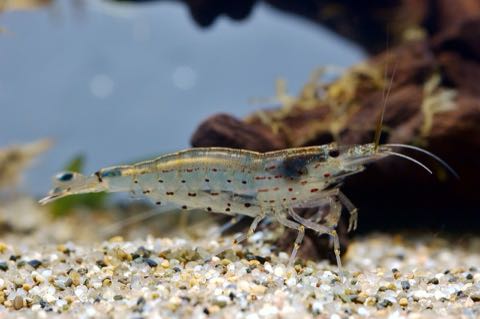 Amano shrimp
- American flagfish
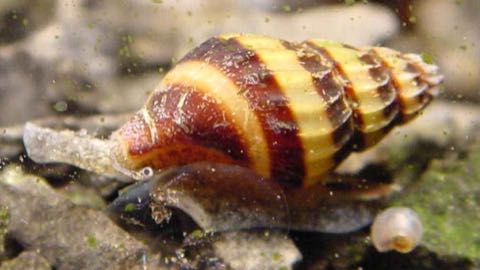 Assassin snail
- Banded gourami
- Bandit cory
- Banjo catfish
- Black phantom tetra
- Black ruby barb
- Blackline rasbora
Avoid with
- Irian Jaya rainbowfish
No shared temperature rangeNo shared temperature range
- Parkinson's rainbowfish
No shared temperature rangeNo shared temperature range
- Rusty cichlid
No shared temperature rangeNo shared temperature range
- Alligator gar
Alligator gar may eat Denison barbAlligator gar may eat Denison barb
- Altum angelfish
No shared temperature rangeNo shared temperature range
- Antenna ray
Antenna ray may eat Denison barbAntenna ray may eat Denison barb
- Arapaima
Arapaima may eat Denison barbArapaima may eat Denison barb
- Asian arowana
Asian arowana may eat Denison barbAsian arowana may eat Denison barb
- Australian pearl arowana
Australian pearl arowana may eat Denison barbAustralian pearl arowana may eat Denison barb
- Azure hap
No shared temperature rangeNo shared temperature range
- Bullseye snakehead
Bullseye snakehead may eat Denison barbBullseye snakehead may eat Denison barb
- Butterfly peacock bass
Butterfly peacock bass may eat Denison barbButterfly peacock bass may eat Denison barb
Denison barb health problems
Ich is a freshwater parasite infection that can manifest as salt-like white spots across the body, gill irritation, rubbing against hardscape, and reduced appetite. Because visual appearance alone does not confirm a diagnosis, seek qualified advice promptly if you spot these signs.Ich is a freshwater parasite infection that can manifest as salt-like white spots across the body, gill irritation, rubbing against hardscape, and reduced appetite. Because visual appearance alone does not confirm a diagnosis, seek qualified advice promptly if you spot these signs.[3]
To reduce the risk of introducing ich into your display aquarium, quarantine new arrivals for at least 30 days and use separate or disinfected nets between tanks.To reduce the risk of introducing ich into your display aquarium, quarantine new arrivals for at least 30 days and use separate or disinfected nets between tanks.[3]
Fin rot is a bacterial disease encouraged by poor water conditions and stress. Visible signs include fraying fins marked by red streaks, followed by progressive shrinking of the fin tissue.Fin rot is a bacterial disease encouraged by poor water conditions and stress. Visible signs include fraying fins marked by red streaks, followed by progressive shrinking of the fin tissue.[4]
Maintain strict water quality and eliminate sources of physical trauma or companion harassment to reduce fin-rot risk. Inspect any deteriorating fins promptly for proper assessment.Maintain strict water quality and eliminate sources of physical trauma or companion harassment to reduce fin-rot risk. Inspect any deteriorating fins promptly for proper assessment.[4]
Fungal infections appear as grey-white cottony growths on damaged skin when physical injuries or environmental stressors compromise a fish's protective mucus coat. Using smooth decor, handling fish gently, and maintaining clean water reduce injury risks; seek prompt advice if cottony tufts appear.Fungal infections appear as grey-white cottony growths on damaged skin when physical injuries or environmental stressors compromise a fish's protective mucus coat. Using smooth decor, handling fish gently, and maintaining clean water reduce injury risks; seek prompt advice if cottony tufts appear.[4]
Male or female?
Adult female Denison barbs tend to be slightly larger and heavier-bodied than adult males. Females also tend to display less intense colouration, though these visual tendencies do not make every individual easy to sex.Adult female Denison barbs tend to be slightly larger and heavier-bodied than adult males. Females also tend to display less intense colouration, though these visual tendencies do not make every individual easy to sex.[1]
Questions
How many Denison barbs should I keep together?
Keep at least six Denison barbs together, though sources suggest keeping a shoal of six to ten. This is a schooling species that is generally peaceful in a researched community.Keep at least six Denison barbs together, though sources suggest keeping a shoal of six to ten. This is a schooling species that is generally peaceful in a researched community.[1]
Do Denison barbs need strong oxygenation?
Yes, Denison barbs require high dissolved oxygen levels and moderate water movement. In their native streams, they inhabit well-oxygenated headwaters and rocky pools, and they poorly tolerate accumulated organic waste.Yes, Denison barbs require high dissolved oxygen levels and moderate water movement. In their native streams, they inhabit well-oxygenated headwaters and rocky pools, and they poorly tolerate accumulated organic waste.[1]
Can Denison barbs live in a planted tank?
Yes, Denison barbs do not tend to harm aquatic plants in a well-maintained aquarium. Provide a long swimming area alongside planted cover around the perimeter.Yes, Denison barbs do not tend to harm aquatic plants in a well-maintained aquarium. Provide a long swimming area alongside planted cover around the perimeter.[1][8]
How often should I feed Denison barbs?
Feed them once a day. Provide only the amount of food they can consume within a few minutes to prevent decaying leftovers from releasing toxic waste.Feed them once a day. Provide only the amount of food they can consume within a few minutes to prevent decaying leftovers from releasing toxic waste.[2]
What is a gold Denison barb?
A gold Denison barb is a selectively bred colour form of Sahyadria denisonii. It belongs to the same species as the wild-type red-line torpedo barb rather than forming a distinct species.A gold Denison barb is a selectively bred colour form of Sahyadria denisonii. It belongs to the same species as the wild-type red-line torpedo barb rather than forming a distinct species.[1]
How can I tell male and female Denison barbs apart?
Adult females tend to be slightly larger, heavier-bodied, and less colourful than males. While these visual cues help differentiate adults, not every individual is easy to distinguish.Adult females tend to be slightly larger, heavier-bodied, and less colourful than males. While these visual cues help differentiate adults, not every individual is easy to distinguish.[1]
Sources
- Sahyadria denisonii (Red-line Torpedo Barb) — Seriously Fish. Accessed 2026-10-05.
- How to look after barbs — Ornamental Aquatic Trade Association. Accessed 2026-10-05.
- Ichthyophthirius multifiliis (White Spot) Infections in Fish — UF/IFAS Extension. Accessed 2026-10-05.
- Frequently asked questions on treating sick fish — Practical Fishkeeping. Accessed 2026-10-05.
- Astronotus ocellatus (Oscar) — Seriously Fish. Accessed 2026-10-05.
- Rocio octofasciata (Jack Dempsey) — Seriously Fish. Accessed 2026-10-05.
- Carinotetraodon travancoricus (Dwarf Puffer) — Seriously Fish. Accessed 2026-10-05.
- A guide to Red lined torpedo barb (Dawkinsia denisoni) — Practical Fishkeeping. Accessed 2026-10-05.
Written from the sources above. Not yet reviewed by an aquarist.
Data used by the planner
| Temperature range | 18–25 | AqAdvisor (aqadvisor.com), retrieved 2026-10-04 · low confidence |
|---|---|---|
| pH | 6–8 | AqAdvisor (aqadvisor.com), retrieved 2026-10-04 · low confidence |
| Hardness (dGH) | 5–15 | AqAdvisor (aqadvisor.com), retrieved 2026-10-04 · low confidence |
| Origin | Asia or captive aquarium strains | curated-v0 (needs expert review) · low confidence |
| Beginner friendly | Yes | curated-v0 (needs expert review) · medium confidence |
| Care level | easy | curated-v0 (needs expert review) · medium confidence |
| Activity | active | curated-v0 (needs expert review) · medium confidence |
| Swimming level | middle | curated-v0 (needs expert review) · medium confidence |
| Temperament | peaceful | curated-v0 (needs expert review) · medium confidence |
| Nips fins | No | curated-v0 (needs expert review) · medium confidence |
| Long fins | No | curated-v0 (needs expert review) · medium confidence |
| Territorial | No | curated-v0 (needs expert review) · medium confidence |
| Lives in groups | Yes | curated-v0 (needs expert review) · medium confidence |
| Minimum group | 6 | curated-v0 (needs expert review) · medium confidence |
| Diet | omnivore | curated-v0 (needs expert review) · medium confidence |
| Lifespan (years) | 5–10 | curated-v0 (needs expert review) · low confidence |
| Months to adult size | 24 | curated-v0 (needs expert review) · low confidence |
| Safe with plants | Yes | curated-v0 (needs expert review) · medium confidence |
| Minimum tank length | 150 | curated-v0 (needs expert review) · medium confidence |